Stuck at the Loading Dock: How Extract Quietly Foretold America's Supply Chain Meltdown
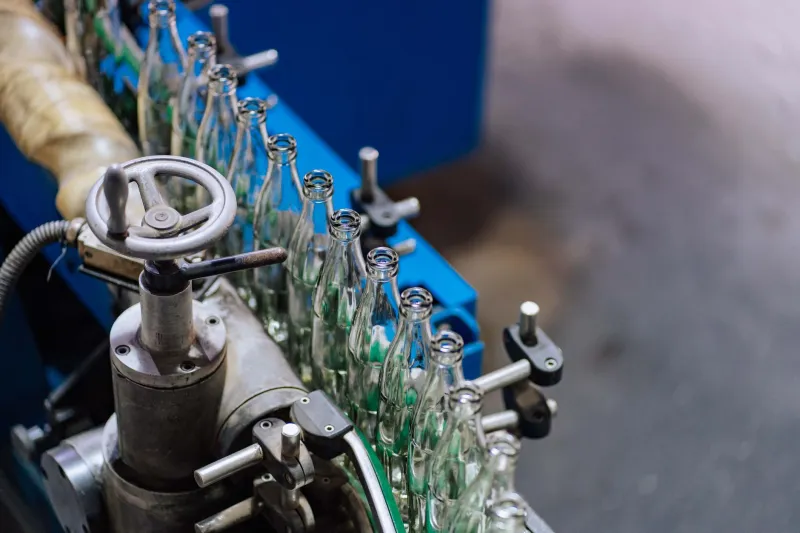
There's a moment in Extract that probably didn't land the way Mike Judge intended back in 2009. Joel Miller, played by Jason Bateman, is staring at his modest bottling plant with the quiet desperation of a man watching sand slip through his fingers. The extract is made. The product is real. And yet somehow, through a cascade of human error, bad luck, and institutional dysfunction, it just won't move. It won't ship. It won't sell. It just sits there.
Audiences in 2009 laughed. Audiences in 2023 recognized it.
Because somewhere between the film's theatrical release and its current life on streaming, the rest of America finally caught up to what Judge was putting on screen. The supply chain crisis that paralyzed the country during and after the pandemic — the container ships backed up off Long Beach, the semiconductor shortages that stalled auto production, the toilet paper wars of March 2020 — all of it suddenly gave Extract a second life as something closer to documentary than comedy.
A Simple Product With Complicated Problems
On the surface, Extract is about a guy trying to sell his vanilla extract company and get out. But dig one layer deeper and it's really about the maddening gap between making something and actually delivering it. Joel's plant is perpetually one crisis away from functioning normally. A worker loses a finger. An injury lawsuit materializes out of nowhere. A grifter waltzes in and starts working the floor. Key employees check out emotionally long before they clock out physically.
Every single one of those friction points — the human unreliability, the legal exposure, the workforce disengagement, the inability to maintain consistent output — became headline news during the supply chain disruptions of the early 2020s. Companies couldn't find workers. Workers who showed up weren't fully present. Litigation risk ballooned. And the thing that was supposed to get made and shipped just... didn't.
Judge wasn't guessing. He was observing. He'd spent years watching American small manufacturing operate on vibes and duct tape, and he put exactly that on screen.
The Corner-Cutting Comes Home to Roost
One of the film's quieter but more devastating insights is the way it shows how cost-cutting and corner-cutting create compounding fragility. Joel's plant isn't a disaster because of one catastrophic failure — it's a disaster because of a hundred small compromises that have been accumulating for years. The wrong people are in the wrong jobs. Processes that should be documented exist only in someone's head. The whole operation runs on informal knowledge and personal loyalty rather than actual systems.
Sound familiar? It should. When COVID hit American manufacturing, one of the first things supply chain analysts started talking about was how decades of lean production, just-in-time inventory, and offshoring had stripped out all the redundancy. There was no slack in the system. No buffer. One disruption — a factory shutdown in Wuhan, a ship stuck in the Suez Canal, a winter storm in Texas — and the whole thing seized up like an engine with no oil.
Joel's extract plant is that engine. It looks functional until it isn't. And when it isn't, there's nothing in reserve.
Workforce Dysfunction as a Systemic Warning
A huge chunk of Extract's runtime is dedicated to showing just how checked-out the average floor worker is. They're not malicious. They're not incompetent in any dramatic way. They're just... disengaged. Going through the motions. Doing the minimum and watching the clock.
That depiction felt like exaggerated satire in 2009. By 2021, it had a name: the Great Resignation. Millions of American workers — particularly in manufacturing, logistics, and distribution — simply stopped showing up, or stopped caring, or both. The reasons were complicated and real, involving wages, working conditions, and a pandemic-era rethinking of what work was even for. But the result looked an awful lot like Joel's factory floor.
Judge wasn't being cruel to those workers when he filmed them that way. He was being accurate about what happens when people feel no ownership over what they're producing. When the work means nothing beyond a paycheck, the work suffers. And when the work suffers, the product doesn't ship.
The Grifter in the Machine
Then there's Cindy — Mila Kunis's character — who slides into the plant with no real qualifications and immediately starts exploiting every crack in its structure. She's charming, she's opportunistic, and she's only possible because the plant's internal controls are basically nonexistent. Nobody's really watching. Nobody's really accountable. She just walks in and starts extracting value.
In the supply chain context, Cindy is every bad actor who showed up during the disruption years to exploit the chaos. The price gougers. The counterfeit PPE vendors. The freight brokers who jacked rates by 400 percent because they could. When systems are fragile and oversight is thin, opportunists flood the gaps. Extract knew that too.
Why It Took a Crisis to See the Movie Clearly
Part of why Extract was underestimated on release is that its satire was too grounded to feel urgent. Office Space had a specific villain in the form of corporate dehumanization. Idiocracy had a high-concept hook. Extract just had a guy with a small factory and a lot of problems that felt mundane.
Mundane, it turns out, was the point. The supply chain crisis wasn't dramatic either — not at first. It was just stuff not arriving. Shelves with gaps. Delivery windows that kept slipping. The accumulation of small failures that eventually added up to something genuinely destabilizing.
That's exactly the texture of Extract. It's not one big explosion. It's the slow-motion collapse of something that was never as solid as it looked.
Squeezing the Lesson Out
If there's one thing the supply chain meltdown of the 2020s taught American consumers and policymakers, it's that the distance between "we make this" and "this gets to you" is filled with fragile human systems that nobody bothered to stress-test. Extract made a whole movie about that distance back in 2009 and got a modest box office and a cult following for its trouble.
Now, with the benefit of hindsight and a few genuinely rough years for American logistics, the film reads less like a quirky workplace comedy and more like a case study in systemic vulnerability. Joel Miller's extract never quite ships on time. America spent about three years figuring out exactly how that feels.
Mike Judge, as usual, just got there first.